2026-11-05 ·
Frozen and Burst Pipes in Chicago Winters: Prevention and Cleanup
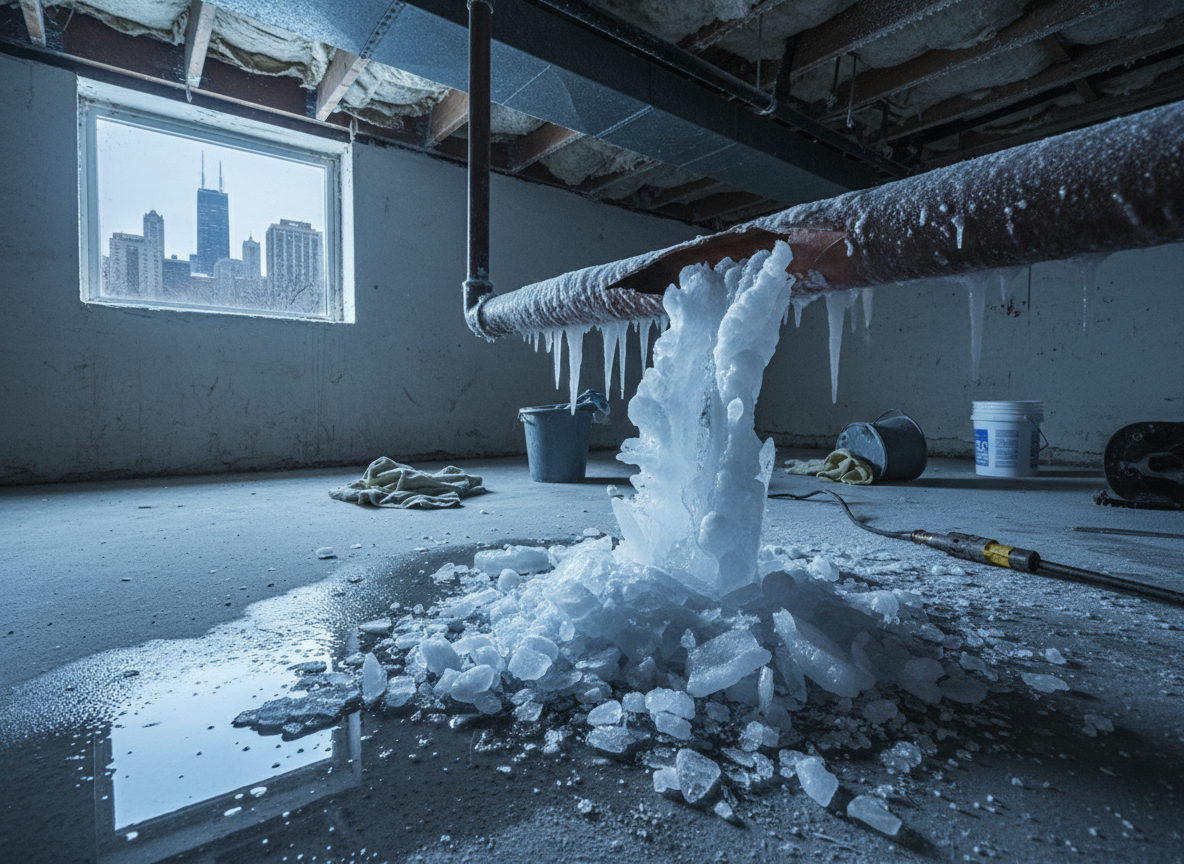
Chicago winters regularly push temperatures below zero, freezing pipes in older homes and causing bursts that require immediate water extraction. Homes built before 1950 in Lincoln Park and Logan Square often have galvanized lines that fail fastest during prolonged cold snaps.
Chicago Winter Conditions That Freeze Pipes
Chicago's humid continental climate delivers rapid temperature drops that penetrate uninsulated walls and crawl spaces. In Cook County neighborhoods such as Wicker Park and Hyde Park, many two-flats and greystones sit on shallow foundations where soil shifts during freeze-thaw cycles, stressing joints. Pipes in exterior walls or near attic vents lose heat quickest when winds off Lake Michigan drop overnight lows into the teens. These patterns repeat every January and February, turning small leaks into ceiling collapses within hours once thawing begins.
Prevention Steps That Work in Local Homes
Insulate exposed supply lines with foam sleeves rated for at least R-3 in basements and crawl spaces common to Rogers Park and Bridgeport. Keep cabinet doors open under sinks so warm air circulates around pipes during cold nights. Disconnect and drain outdoor hoses before the first hard freeze, then shut off exterior valves. Set the thermostat no lower than 55°F when traveling, especially in older Uptown buildings with single-pane windows. Check attic and exterior-wall insulation annually, as gaps allow cold air to reach supply lines that run parallel to framing.
Immediate Actions After a Burst
Shut off the main water valve at the first sign of spraying or ceiling drips, then open faucets on lower floors to drain remaining pressure. Move furniture and rugs away from affected areas in South Loop or West Loop apartments to prevent secondary staining. Document the water line with photos before any cleanup begins. Avoid using household fans until standing water is removed, because excess moisture can push into drywall cavities and reach neighboring units in multi-family buildings.
Professional Water Extraction and Drying
Technicians use truck-mounted pumps to pull hundreds of gallons from finished basements faster than portable units allow. After Emergency Water Extraction, moisture meters track hidden saturation in plaster and subfloors typical of Andersonville and Pilsen homes. Dehumidifiers run continuously for three to five days while air movers target wall cavities. For properties that also need pipe replacement, Burst Pipe Repair crews coordinate timing so new lines are installed before final drying verification.
Long-Term Restoration Considerations
Once drying is complete, homeowners in Evanston and Oak Park often request checks for hidden mold behind baseboards. If water reached concrete slabs, review the steps outlined in Can Concrete Be Restored After Water Damage?. Properties that experienced repeated freezes benefit from rerouting vulnerable lines away from exterior walls during repairs. Regular inspections each fall catch corrosion before another cold front arrives.
When to Contact Restoration Help
Call for Water Damage Restoration as soon as water is shut off if drywall is saturated or flooring is lifting. Delaying extraction beyond 24 hours increases the chance that affected areas in Lakeview or Hyde Park will need full replacement rather than drying alone. Crews familiar with Chicago's older housing stock know which plaster walls can be saved and which must be removed to reach wet insulation.