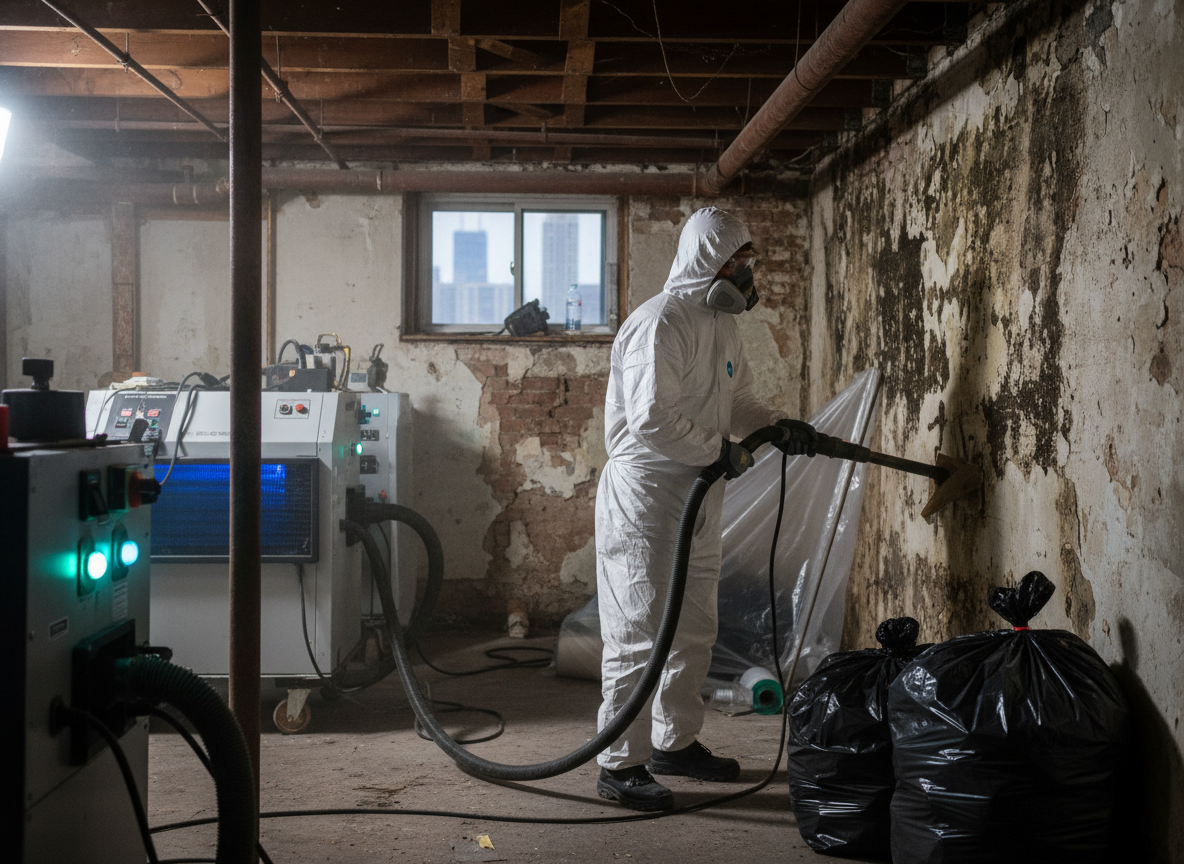
Chicago's pre-war and early 20th-century housing stock in neighborhoods like Logan Square, Bridgeport, and Rogers Park often features plaster-over-lath walls and brick exteriors that trap moisture after roof leaks or pipe bursts. Once water enters, mold can spread behind surfaces without visible signs on the exterior. Remediation requires opening walls selectively, using negative air machines with HEPA filtration, and disposing of contaminated materials without cross-contaminating living spaces. Winter temperature swings in Cook County accelerate condensation on cold pipes and uninsulated basements, creating recurring growth points that demand source removal rather than surface cleaning alone.
Lake Michigan humidity combined with hot summers leaves attics and crawl spaces in West Loop and South Loop buildings vulnerable after heavy rains. HVAC systems common in multi-unit buildings can distribute spores if coils or ducts remain damp. Technicians must isolate affected zones with plastic sheeting and airlocks, then apply EPA-registered antimicrobials only after physical removal. Homeowners in Evanston and Oak Park face similar issues in frame and masonry homes where improper prior repairs leave cellulose insulation saturated, requiring full section replacement to meet current Illinois moisture-control expectations.
Edge cases include mold in historic properties near the Chicago Riverwalk or Grant Park where access is limited and material matching matters. DIY attempts with bleach often drive roots deeper into wood framing, increasing structural risk. Proper work includes post-remediation moisture mapping with meters and documentation for insurance adjusters handling claims from flash flooding in Pilsen or Andersonville.
Technician insight
In Chicago, the thing that catches most people out with Mold Remediation is hidden growth behind plaster in pre-war buildings in neighborhoods like Logan Square or Bridgeport where winter condensation on uninsulated pipes keeps feeding the problem long after the initial leak is fixed.
Hidden growth after pipe leak in Wicker Park
A homeowner in a 1920s brick two-flat noticed musty odors after a second-floor bathroom leak. Inspection revealed mold behind lath-and-plaster walls extending into the first-floor ceiling. Crews contained the space, removed affected sections, treated framing, and dried the structure before reinstalling drywall. The unit passed clearance testing and returned to normal use without recurring odors.
Mold Remediation Services We Offer
✓Basement Mold Remediation
Removes growth from Chicago basements where sump pump failures or foundation seepage are common in older brick homes.
✓Attic Mold Removal
Addresses condensation and roof leak mold in attics of frame houses in Lincoln Park and Wicker Park.
✓Black Mold Containment and Removal
Isolates and extracts Stachybotrys from water-damaged drywall and insulation after pipe or appliance leaks.
✓HVAC System Mold Cleaning
Cleans coils and ducts that spread spores through multi-unit buildings in the West Loop and South Loop.
✓Post-Flood Mold Remediation
Treats secondary growth following basement flooding common in low-lying areas near the Chicago River.
✓Crawl Space Mold Treatment
Dries and treats enclosed spaces under older homes in Hyde Park and Uptown where ventilation is poor.
Mold Remediation Cost in Chicago, IL
| Service | Typical Range | What Affects It |
|---|---|---|
| Small room or closet remediation | $900–$1,800 | Increases with hidden growth behind plaster in pre-war homes. |
| Basement section treatment | $1,500–$3,200 | Higher when foundation seepage affects multiple walls. |
| Attic mold remediation | $1,200–$2,600 | Varies with insulation type and roof access in frame houses. |
| HVAC duct and coil cleaning | $800–$1,500 | Depends on system size in multi-unit buildings. |
Ranges are typical for Chicago, IL and confirmed with an exact written quote before any work starts.
How it works
- 1
Initial Assessment
Technicians inspect affected zones with moisture meters and borescopes to map hidden growth in walls and ceilings.
- 2
Containment Setup
Plastic barriers and negative air pressure isolate the work area to prevent spore spread to unaffected rooms.
- 3
Physical Removal
Contaminated drywall, insulation, and trim are cut out and bagged for disposal before antimicrobial application.
- 4
Drying And Clearance
Air movers and dehumidifiers restore dry conditions, followed by post-work moisture verification.
Pricing
Costs depend on square footage, accessibility in older Chicago buildings, and whether HVAC involvement is required.