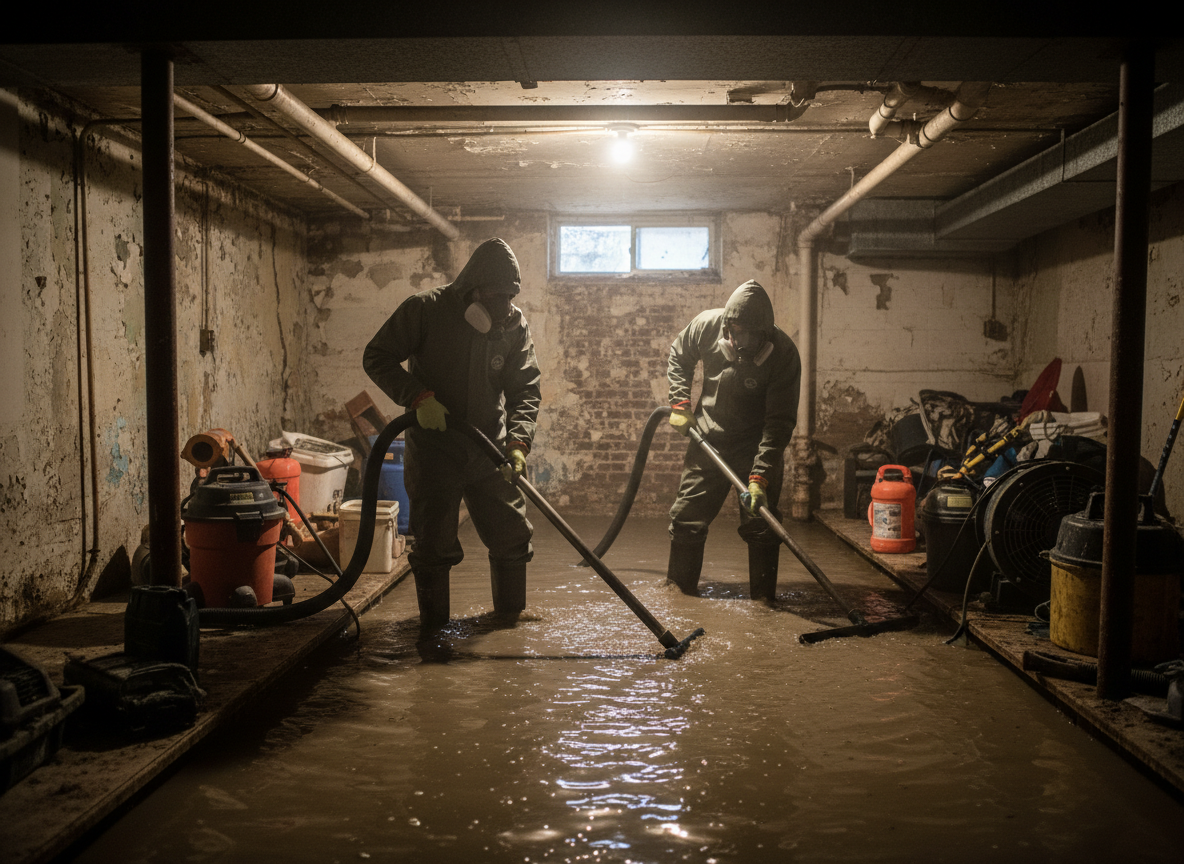
Chicago's older brick homes in neighborhoods like Bridgeport and Pilsen often have clay sewer lines from the early 1900s that crack under shifting soil. When these lines back up during spring thaws or summer storms, sewage can pool in basements for days before discovery. Extraction must account for the dense clay subsoil that slows natural drainage and keeps moisture trapped against foundation walls. Technicians remove standing water first, then pull saturated drywall and insulation before pathogens migrate into joists.
Humid continental weather brings sudden downpours that overwhelm combined sewer systems near the Chicago Riverwalk and in Logan Square. Properties in these low-lying blocks see sewage mixed with stormwater enter through floor drains. Proper remediation requires separating solid waste, treating porous surfaces with EPA-registered disinfectants, and running commercial air movers for extended periods because high summer humidity delays drying. Failure to address hidden pockets behind cabinets leads to recurring odor issues weeks later.
In single-family homes near Uptown and Rogers Park, cast-iron stacks corrode from decades of road salt exposure. A single overflow can affect multiple levels because waste travels through shared walls in attached structures. Cleanup crews isolate HVAC returns quickly to prevent aerosolized contaminants from spreading, then document moisture readings at multiple depths in flooring to satisfy insurance adjusters who review Cook County jobs.
Technician insight
In Chicago, the thing that catches most people out with Sewage Cleanup is the way old clay sewer laterals in neighborhoods like Hyde Park and Bridgeport hold water long after the rain stops, letting contamination wick up into plaster walls that look dry on the surface.
Overflow in Lincoln Park Two-Flat
A corroded cast-iron stack in a 1920s two-flat backed up during a July storm. Sewage reached the first-floor bathroom and seeped into the shared wall cavity. Crews extracted water, removed base cabinets and drywall on both sides, then dried the cavity for five days before reinstallation.
Sewage Cleanup Services We Offer
✓Basement Sewage Extraction
Removes standing black water from Chicago basements after pipe failures, using pumps sized for older foundation depths common in Wicker Park and Bridgeport.
✓Black Water Remediation
Treats surfaces contaminated by sewage backups with targeted antimicrobials, focusing on porous materials in humid summer conditions around Lakeview and Andersonville.
✓Kitchen Drain Backup Cleanup
Clears and disinfects areas affected by grease and waste clogs in older homes near the South Loop and Pilsen where narrow pipes trap debris.
✓Bathroom Sewage Removal
Extracts overflow from toilets and showers in multi-unit buildings common in Lincoln Park and West Loop, preventing cross-contamination between floors.
✓Sewage Odor Elimination
Neutralizes lingering smells in drywall and subfloors after extraction, especially in tightly sealed brownstones in Hyde Park where air exchange is limited.
Sewage Cleanup Cost in Chicago, IL
| Service | Typical Range | What Affects It |
|---|---|---|
| Single-room extraction | $450–$850 | Higher in older homes with limited access in neighborhoods like Pilsen |
| Full basement cleanup | $1,200–$2,400 | Increases with clay soil slowing drainage in Logan Square |
| Multi-level sewage removal | $2,000–$3,800 | Common in attached structures near the West Loop |
| Odor treatment add-on | $300–$600 | Required after prolonged exposure in humid summer conditions |
Ranges are typical for Chicago, IL and confirmed with an exact written quote before any work starts.
How it works
- 1
Site Assessment
Technicians inspect affected rooms, test moisture levels in walls and floors, and identify the source of the backup in the specific neighborhood housing stock.
- 2
Water Extraction
Industrial pumps and vacuums remove standing sewage while containing runoff to avoid spreading contaminants to unaffected areas of the home.
- 3
Contaminated Material Removal
Saturated drywall, carpet, and insulation are cut out and bagged for proper disposal following local Cook County waste guidelines.
- 4
Disinfection and Drying
EPA-registered products treat remaining surfaces, followed by dehumidifiers and air movers until moisture readings return to normal.
Pricing
Pricing depends on affected square footage, number of affected levels, and how quickly the source is stopped.